Losing Your Actions

Imagine: A friend of yours at a party makes an ingenious comment, and you praise it in front of others, feeling glad about their ingenuity. They come up to you afterwards, bothered, to ask you why you’ve mocked them in public. You are confused. You tell them that there must have been some kind of misunderstanding. But they insist, unfazed, arguing that you’re just continuing the joke. Or take a different case. Say you politely smile at someone in the street. Your partner turns to you, confused, asking you why you’ve flirted with a stranger, doubling down even when you say you did nothing of the sort.
What is it that makes these situations so disconcerting and disorienting? At first pass, it seems like you and the other person have a disagreement about what your actions were. Actions can be described in all sorts of ways. But their descriptions often involve an intentional component: you said some things to your friend in order to mock them, or you smiled at the strange in order to flirt with them. And, so, sometimes we describe actions by focusing only on the intentional component, and we say that you mocked your friend, or that you flirted with a stranger. Then, on a second pass, in the situations above, it seems like you are having a dispute about what your intentions were via a dispute about what your actions amounted to.
Still, we have disputes about all sorts of things, and rarely do they make us feel the kind of disconcertment of the situations above. Consider the dispute about whether you flirted with the stranger. Anyone who has had a jealous partner has experienced the dynamic of being accused to have done something that they didn’t do. But while that experience can be annoying, tiresome and often lead to enough friction to make a relationship end, it’s typically only in the initial moments, before you’ve realized that your partner is, indeed, a jealous person, that the misdescription of your intentions is disconcerting. So, disputes about intentions can’t be the whole explanatory story.
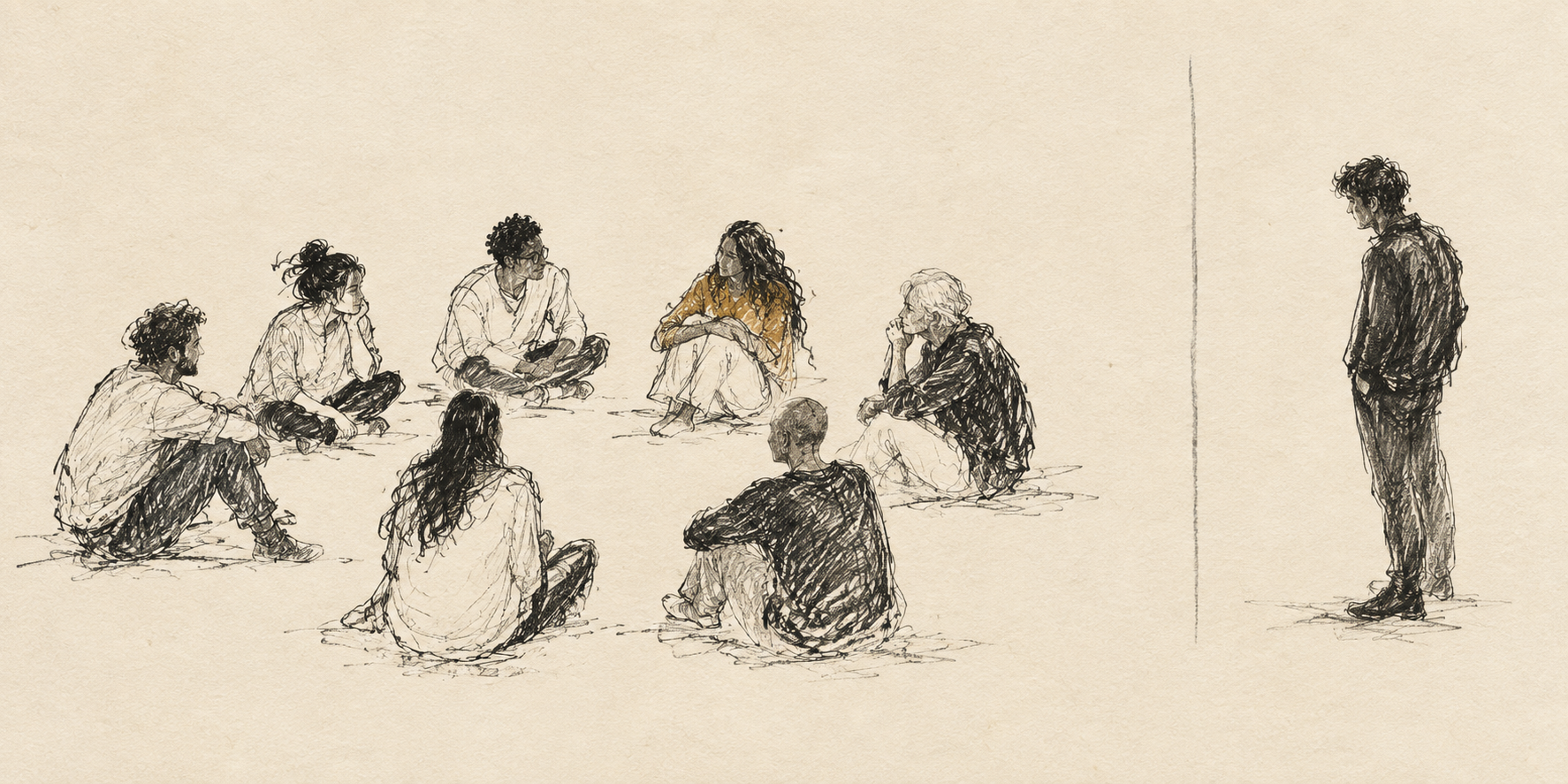
What’s central to these experiences is, instead, disorientation: a dream-like feeling of not knowing what is happening or why. This kind of disorientation is not unfamiliar to philosophers. Consider the feeling you have when you find yourself going the kitchen, not knowing why. David Velleman explains this feeling by arguing that we have an aim to know what we are doing beyond mere purposeless bodily behavior. I have satisfied this aim when I know that I am going in the kitchen in order to get some tea, but not when I merely find myself walking there. Mere behavior is not enough. Velleman also notes that the aim to know what we are doing is a sub-agential aim: it’s not one of the goals that consciously motivates us to act but, rather, like pain-avoidance, it’s something that makes us go for certain goals over others rather unconsciously. This is part of why failing at this aim feels different than, say, trying to go for a jar in the top shelf and failing at it. The other part is simpler: acting intentionally is central to what it is to be an agent. We can’t make sense of most what we do as purposeless.
Could this be enough to explain what’s going on in the cases of interpersonal disorientation? Maybe the story could go like this: when your friend tells you that you that you mocked them even after you tell them you didn’t, they open up the possibility that you did. But what you thought you had done was praise them, and now, at least for a second, you feel you cannot rule out having done otherwise. After all, it’s your friend saying so! But then it seems you know longer know what you did (or you are no longer sure or you are no longer confident, etc.). And so you feel a disorientation that is similar to that of finding yourself walking to the kitchen, even if projected into the past. You no longer know what you did.
Is this enough? I’m not sure. But here’s a reason to think that it is not. There’s a weightiness to the disorientation of the interpersonal cases. You feel like the rug has been pulled out from under you. No mysterious kitchen visit throws us off like this. It’s more like the kind of disorientation that you feel when you realize that there’s no common ground between you and person you’re speaking with. To use a personal case: I knew someone that was unsure about whether to crash her car or not to get the insurance money. I asked her whether her hesitation came from worrying that she’d hurt someone. She said that things were trickier. She was worried that her car might have a soul, and that if it did, then in the next life the car might take revenge from her. I realized, in slow motion, that I had no idea what I could say to continue our conversation. How could we get a grip on each other?
An absence of common ground is not too worrisome if you find yourself in such a situation with a stranger. But it’s terrible when it’s with someone you have a relationship with. Relationships involve incredible amounts of coordination that is bound to go awry without a common ground. And, often, relationships involve taking seeing the world, together, from a shared point of view. When you discover that someone you love is, say, worrying about the souls of cars, you suddenly worry that your joint activities and shared perspective are an illusion. You immediately seek to repair it.
Maybe when someone disputes your intentions, a magnified version of this takes place. Normally, someone’s intentions are not something we can read off their mere behavior. Instead, we know what our intentions are, and we hear from others what their intentions are. Then we operate on induction: we see instance after instance of a certain kind of behavior embodying a certain intentional action. When we are in doubt, we ask people, and we take their word about what they’re doing. If, seeing you walk towards the kitchen, I ask you what you’re doing, and you say that you’re going for some tea, I take your word for it. There’s no two ways about it.
What are you supposed to do, then, when someone disputes what you say about your actions? How can you convince your friend that you weren’t mocking them, or your partner that you weren’t flirting with a stranger? You can’t open your mind to show them your intentions. And because trust in what a person says their actions are is necessary for repairs after a felt loss in common ground, losing this kind of trust is akin to both losing common ground and the path to regaining it. So, when someone disputes our actions, it’s natural to feel disoriented. We peer into the abyss of irretrievable loss.
Contributor
Nurit Matuk Blaustein
Graduate Fellow