Discord in Solidarity & Solidarity on Discord
Politics and political organizing are rapidly moving online, and real material change is being enacted through the digital world. For instance, Nepal elected its first woman prime minister... with a Discord poll. After the government blocked social media platforms, Nepalese youth organized protests in Discord servers accessed with VPNs. One "Youths Against Corruption" Discord server grew to more than 150,000 members and voted interim Prime Minister Sushila Karki into power via a poll adorned with emoji and GIF 'reacts'. Using similar digital organizing tactics, Kickstarter United—a unit composed entirely of remote workers—successfully conducted a 42-day strike, securing a four-day workweek and protections against AI job replacements.
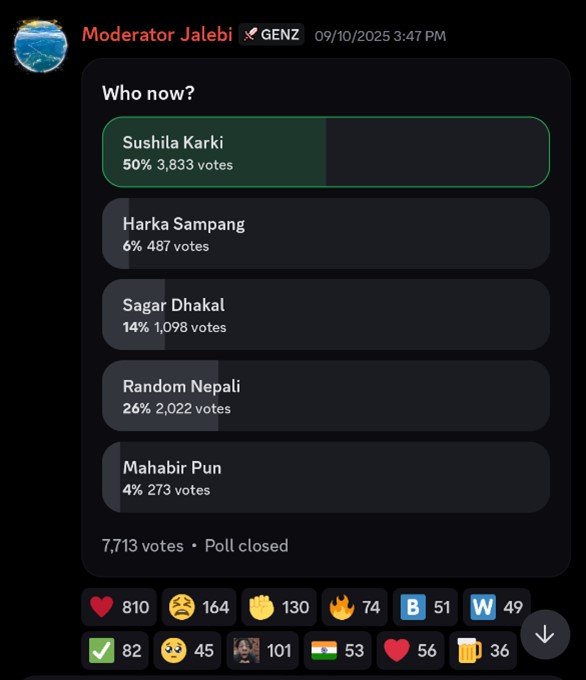
The "Youth Against Corruption" Discord Server poll that elected the interim prime minister. A reference to the Reddit thread where the photo was found is linked in-text.
Even in solidary groups grounded in ‘offline’ cooperation, digital communication is now a necessary feature of organizing. In preparation for the 2024 BU Graduate Workers Union (BUGWU) strike, I watched our BUGWU Slack Workspace grow from a few hundred grad worker organizers to over 1,600 frantic grad workers. Tactics were developed in 100+ comment threads; Slack polls filled with whipped votes determined whether in-person meetings used asynchronous or synchronous voting. There’s a question on every organizer’s mind: what are the tradeoffs to building solidarity online—can online solidarity be sustained long–term, or are digitally mediated solidary relations necessarily defective?
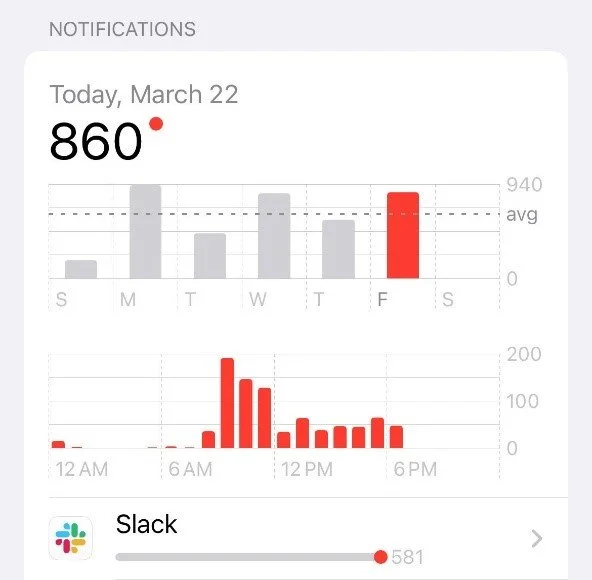
A screenshot of my phone's notification log for March 22, 2024—three days before the start of the BUGWU strike. The log indicates that my phone received 860 notifications before the screenshot was taken at 6:29PM, 581 of which came from the BUGWU Slack.
I take it as a starting point that solidarity is valuable. Solidarity builds collective power and deepens individuals’ moral understanding of the injustice relevant to them. Solidarity enjoys these benefits because it rests on cooperative action—solidary individuals sharing stakes in the struggle. And while a personal Tweet of support, accompanied by no other action, may be a parasitical claim to solidarity, it would be odd to say that electing a prime minister in a moderated Discord server with over 150,000 members is not a tremendous feat of cooperation. Digital methods can certainly build and enact the collective power salient in solidarity.
The question then becomes: can digital spaces produce solidarity’s shared moral understanding in the same way in-person cooperation can? Solidarity produces shared moral understanding with trusting conflict; through debate, solidary groups cohere a shared evaluation of the uniting injustice. Everyone involved shares the same primary goal, yet not everyone agrees on what that entails or on how to achieve it. In solidarity, individuals trust that their comrades are engaging in good faith.
Slack spaces with 1,600 members are highly effective at fostering interpersonal conflict, particularly over tactics and priorities. However, there’s still the matter of trust. Trust is affective; when we trust someone, we hold “an attitude of optimism” that amounts to a “distinctive way of seeing” them (Jones 11). Moreover, the affective nature of trust means that affective feedback loops often sustain it: trust grows when reinforced by “allied” emotions like confidence, empathy, esteem, and security.
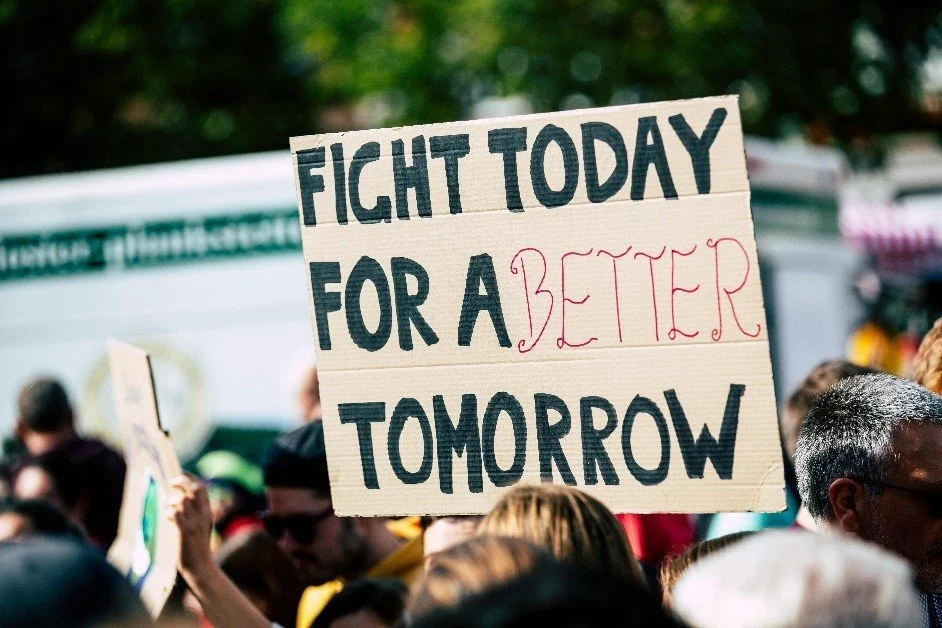
A group of people holding a sign: "Fight Today for a Better Tomorrow". Open-source image.
When solidarity is “offline,” trust naturally loops through the process of embodied cooperative action—winning and losing together. A certain magic happens when you watch a comrade who once vehemently opposed using a tactic you promoted now be thrilled by its success. It’s the magic at the core of Durkheim’s collective effervescence: the “intense shared energy, enthusiasm, and heightened sense of belonging and unity” among solidary individuals (Kronsted, 3-4).
The problem is that this magic doesn’t occur online. A 5-hour-long Zoom bargaining session ends; you let out a sigh of relief, close your laptop, and find yourself alone at your desk. There’s nowhere to channel the anger you feel at the administrator who rolled her eyes at your comrade sharing a heartbreaking story… until, that is, you meet up at the off–campus pub later that evening. Digital mediation allows people to conceal their identit–y/–ies with two significant implications:
1. The OPSEC (Operational Security) Problem. In organizing spaces, there is the ever–present possibility that someone is a fraud, a management mole, or the most dangerous of all: a parent–union staffer who somehow accesses a private #rank-and-file chat! When the solidary group’s primary discursive space is online, the inherent danger of the ill–willed stranger behind the monogrammed ‘pfp’ undermines the conditions for an atmosphere of trust.
2. The Emotional Distance Problem. Digital mediation creates emotional distance between users, reducing empathy and other “allied” emotions that promote trust. You can hide your nervousness while sending snarky replies and savor the validation from reactions. You can turn your camera off when you feel yourself begin to tear up after having your feelings hurt in an emotionally–charged Zoom meeting. Digital mediation allows us to avoid revealing ourselves and being accountable to our feelings.
Assuming we understand the practice of ‘organizing’ as the primary means of building solidarity, accounts from political organizers indicate that subjective empowerment is necessarily embedded in this process. Organizers must inspire personally motivated solidary action, grounded in personal, non-deferential reasons arising from the shared moral understanding of the solidary group. Digitally mediated organizing complicates this.
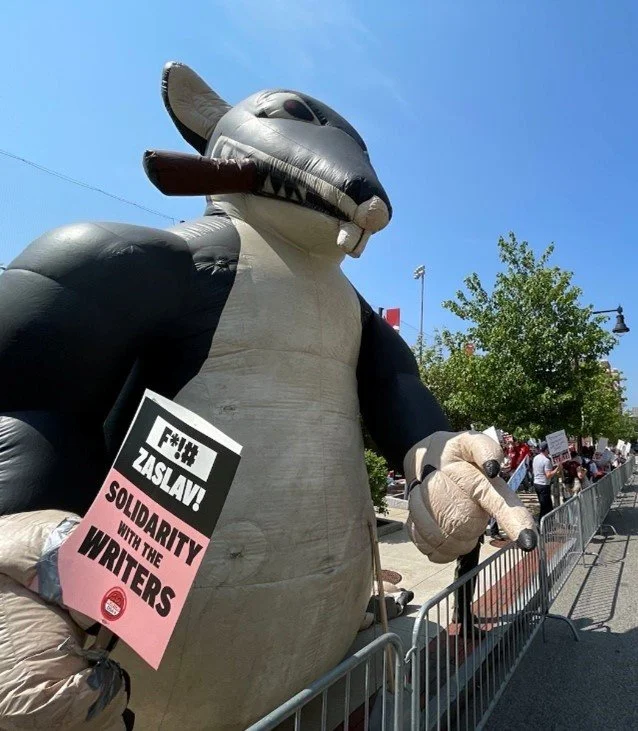
A “Scabby” holding a picket sign that reads: "F*!# Zaslav! Solidarity with the Writers." Scabby is surrounded by striking writers and solidary supporters protesting David Zaslav's commencement address at the 2024 BU graduation ceremony, in support of the WGA strike concurrently taking place nationwide. Photo taken by me.
I recognize that there are practical ways to address the suboptimal quality of digital spaces. I am not making a normative argument about whether organizers should use digital social platforms (or to what extent). There is no way for organizers (or anyone) to avoid using digital communication. Rather, I’m concerned with whether genuine solidarity is even possible when the solidary relationships are digitally mediated, and what I’ve argued thus far amounts to this: solidarity is more fragile and harder to maintain when its primary discursive space is a digital social platform, but it’s possible.
As we have done in response to all technological advancements, we will continue to adapt to the digital world’s effects on our ways of relating. Through exploring the different qualities and textures of digitally–mediated solidarity, we discover the absence of the paradigmatic solidary experience’s salient embodied features: self-organization and subjective empowerment. These features of solidarity are difficult—though not impossible—to produce under digital conditions. As political organizers develop strategies to overcome the hurdles posed by digitally mediated solidary relationships, solidarity’s potential will continue to grow. I am eager to learn from them as they do it.
Until then, I’ll be building solidarity in the space I know to work best: the off–campus pub.

Contributor
Casey Grippo
Affiliated Graduate Fellow