Exile from the Moral Community

Exile from the Moral Community
It will surprise no one who knows me to hear that I’m still thinking about Strawson. “Freedom and Resentment” reshaped our understanding of the moral emotions by drawing attention to two broad but distinct ways in which we relate to other people. We can relate to others on equal footing as members of the same moral community, or we can adopt a more removed, distant view of them—as outsiders of this community.
When we relate to others as co-members of a moral community, we tend to experience natural reactions to how they treat us: what Strawson calls the reactive attitudes. We feel resentment when treated unfairly, gratitude when shown goodwill, and forgiveness when we think another has genuinely seen the error of her ways. These attitudes are reciprocal in the sense that they call for a fitting reply in the form of another’s reactive response.
But sometimes, we passively fall into or actively adopt what Strawson calls an objective attitude: a fundamentally different way of relating to people. Rather than simply reacting to another person, we look to manage, manipulate, train, study, avoid, or handle her. Strawson says that we might use this stance “as a refuge…from the strains of involvement; or as an aid to policy; or simply out of intellectual curiosity” (1962, 25).
Philosophers have paid enormous attention to the reactive side of Strawson’s moral landscape. The objective side has received less scrutiny. That neglect is unfortunate. I think Strawson was pointing to something vitally important: there is something in common to how we view another person when our aim is to manage, study, avoid, or handle her rather than simply to react. Objectivity is not merely the belief that someone is not morally responsible. It is a mental perspective we take up toward a person—and adopting it can change a relationship in ways we do not intend.
The Many Roads to Objectivity
Consider the therapist who must set aside her natural reactions. Across six seasons of The Sopranos, Dr. Melfi treats Tony Soprano, a mafia boss who murders, steals, and expresses views which Melfi finds repugnant. But because of the professional role she occupies, Melfi can’t react to Tony as she normally would. Her focus is on how his experiences affect him and how he processes his emotions. Her dealings with Tony are mediated by an ulterior goal: to resolve his recurring panic attacks. Her own reactions are governed by this aim.
Or consider Fiona’s relationship with her father, Frank, in Shameless. After years of Frank’s neglect and abuse, Fiona begins to ignore behavior that once would have drawn her into angry confrontation. She comes to see him as someone who cannot be engaged with in a fruitful manner, and under this view, her own natural sentiments are completely unproductive. She uses objectivity as a refuge from the strains of involvement—as a way to avoid another person while remaining stuck in his presence.
These instances of objectivity different in their cause and purpose. Melfi’s objectivity results from professional habituation and serves her patient’s wellbeing. Fiona’s provides self-protection, and it’s unclear if she believes her father to be mentally incapable of reactive exchanges or merely unwilling. I suggest that we should think of objectivity as a (mental) destination—a place on the map with several routes to arrive there.
This is where contemporary philosophical accounts go astray. They mistakenly identify objectivity with one of its common causes: believing that someone is determined, mentally incapacitated, or undeserving of blame. But this mistakes a route for the destination. Learning that a brain tumor explains someone’s behavior may cause us to adopt an objective stance, but precisely because it is the cause, it cannot also be the effect. Conversely, we can deliberately take up an objective view of someone whom we may still regard as perfectly capable and responsible, as Melfi exemplifies. Nor does objectivity require turning a ‘who’ into a ‘what.’ Melfi does not forget that Tony is a person. Indeed, his desires shape the goal of their therapeutic sessions. One can withdraw from ordinary reactive exchange while continuing to care deeply about the person from whom one has withdrawn. What changes is the way one sees and engages with another.
The Nature of Objectivity
I propose we understand the objective stance as a mental perspective with three defining characteristics: an intentional lack of emotional vulnerability, the creation or maintenance of mental distance, and a proneness toward instrumental thinking about the other.
First, objectivity limits emotional vulnerability. We should distinguish two senses of vulnerability: concern for another person and access to one’s own emotional life. Concern is emotional investment in what happens to someone, and this sense of emotional connection needn’t be cut off by an objective stance. A parent might close herself off to a drug-addicted adult child while still caring desperately about his wellbeing. What objectivity limits is the other’s emotional access. Access is the power another person has to affect our inner life simply through how they treat us. To make yourself emotionally accessible is to give another person something like a key card to your heart and mind. You open yourself to resentment, gratitude, hurt, or forgiveness in response to her behavior. Because you suspend the ordinary demand that the other treat you with goodwill, you try not to react when that demand is violated. This is more than simply feeling nothing; it’s an intentional limitation of your own proneness to feel reactive attitudes in response to a particular person.
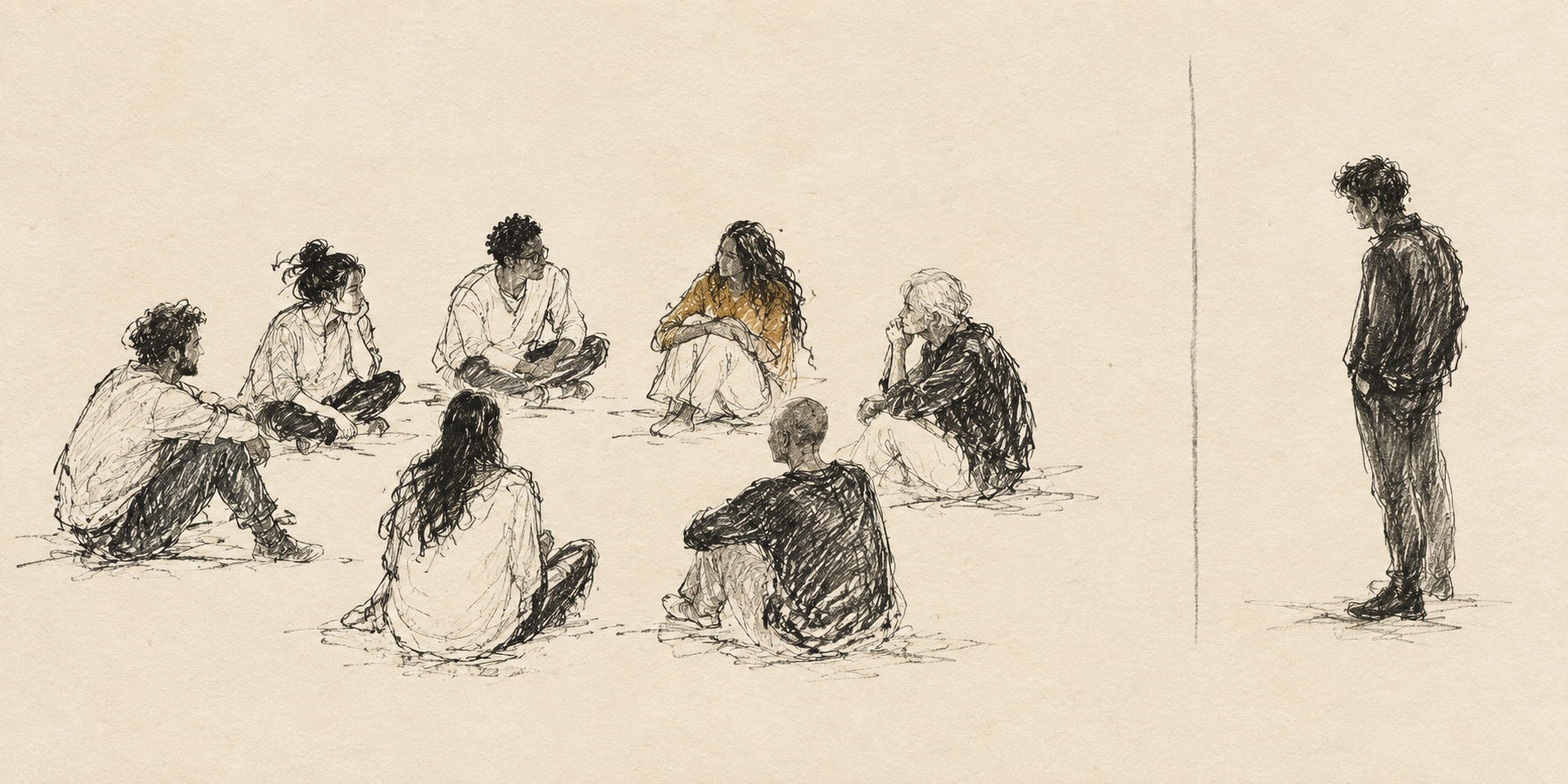
Second, objectivity creates or maintains mental distance. Inhabiting a reactive standpoint towards someone is to be near her, mentally speaking. They’re close by (and this lack of distance gives them the ability to wound you). The objective stance, however, moves in the opposite direction. It is a way of not truly being with a person, even while remaining in her company. Strawson captures this by describing the subject as placed outside one’s moral community. This exile may be permanent, or only a temporary isolation for means of refuge or management.
Finally, inhabiting an objective view disposes us to view another person instrumentally—as a means to some end. When trying to manage or manipulate someone, we often ask: ‘Has this tone of voice created the result I want?’ ‘Would saying X produce Y?’ ‘How do I get her to see the truth?’ The other person becomes part of the landscape through which we navigate rather than a member of our traveling party. But instrumentality need not serve a morally dubious end. Melfi manages her patient for the sake of Tony’s own wellbeing. But in many cases, even benign objectivity changes the structure of the relationship.
When Refuge Becomes Exile
I suggest that my perspectival account can reveal the danger of using objectivity as a practical tool within an existing relationship. I worry that a series of temporary withdrawals can slip into a permanently objective view, even after one’s original reasons for objectivity have disappeared.
First, consider how difficult it can be to fully inhabit an objective stance toward someone with whom you share an established relationship. Your partner or friend is just being impossible, and rather than unproductively firing back, you decide to objectively pull away with the aim of seeking refuge and management. But the reactive standpoint has immense inertia (it’s our default perspective after all). You repeatedly catch yourself feeling resentment, anger, or indignation; you have to repeatedly reset, pulling up the wall of objectivity again. It takes work and repetition to fully inhabit the new perspective.
But once fully adopted, I think that an objective stance possesses that same inertia. Abandoning objectivity can become equally difficult. And because having a reason to adopt objectivity is only the precursor to its adoption, losing that reason is only the precursor to its abandonment. The shift is perspectival, not merely propositional. If objectivity were only a belief about another person, revising the belief should dissolve the stance. But a way of seeing someone can remain after the judgment that produced it has changed. In this way, objectivity resembles a habit. Deciding to develop a habit is different from actually building one. Taking up an objective stance toward someone with whom I have been reactively involved requires breaking one pattern of relating and establishing another. But once established, a pattern of objectivity can become one’s new default.
The objective stance can be an irreplaceable source of refuge or tool of management. But its benefits come at a cost. We may save ourselves from the immediate strains of involvement only to discover that we have exiled someone from our moral community, and no longer know how to bring her back into the fold.
Contributor
Jordan Myers
Graduate Fellow